Top 10 Questions About Wet Timing Belt Replacement Cost Answered

A vehicle can appear to run perfectly while a critical component inside the engine is gradually approaching the end of its service life. The timing belt is one of those components. Although it is not usually visible during everyday driving, it plays an essential role in keeping the engine’s internal components working in precise synchronization.
For drivers across the UK, understanding when a timing belt should be inspected or replaced can help prevent avoidable breakdowns and potentially expensive engine damage. Factors such as vehicle age, mileage, driving conditions, manufacturer recommendations, and the type of timing system fitted can all influence maintenance requirements.
This is particularly relevant as modern engines become increasingly sophisticated. Smaller, turbocharged engines, stop-start driving systems, and more demanding efficiency requirements can place considerable importance on accurate engine timing. As a result, planned maintenance is often more practical than waiting for symptoms to appear.

What Does a Timing Belt Do?
The timing belt connects the engine’s crankshaft and camshaft, ensuring that the valves open and close at the correct point during each combustion cycle. In many engines, the belt also drives components such as the water pump.
Because the crankshaft and camshaft must remain accurately synchronized, a worn or damaged timing belt can have serious consequences. If the belt breaks while the engine is running, the pistons and valves can move out of synchronization. On interference engines, this may result in contact between internal components and significant engine damage.
Timing belts are generally made from reinforced rubber and other durable materials, but they are still service items. Over time, exposure to heat, oil, coolant, tension, and repeated engine cycles can contribute to deterioration.
Importantly, a timing belt does not necessarily provide obvious warning signs before failure. A vehicle may continue to start and drive normally until the belt or another part of the timing system develops a serious fault.
When Should a Timing Belt Be Replaced?
There is no universal replacement interval that applies to every vehicle. Manufacturers normally specify a mileage and/or time interval, and these recommendations can vary considerably between engines.
Drivers should check their vehicle handbook or manufacturer service information for the appropriate schedule. If the vehicle has an uncertain maintenance history, professional inspection and service-history verification can also be useful.
Common factors that may influence timing belt maintenance include:
- Vehicle mileage
- Vehicle age
- Engine design
- Manufacturer recommendations
- Previous replacement history
- Driving environment
- Oil or coolant contamination
- Long periods of vehicle inactivity
- Frequent short journeys and stop-start driving
When researching Timing Belt Replacements UK, motorists should therefore avoid relying solely on a generic mileage figure found online. The correct interval depends on the specific engine and manufacturer guidance.
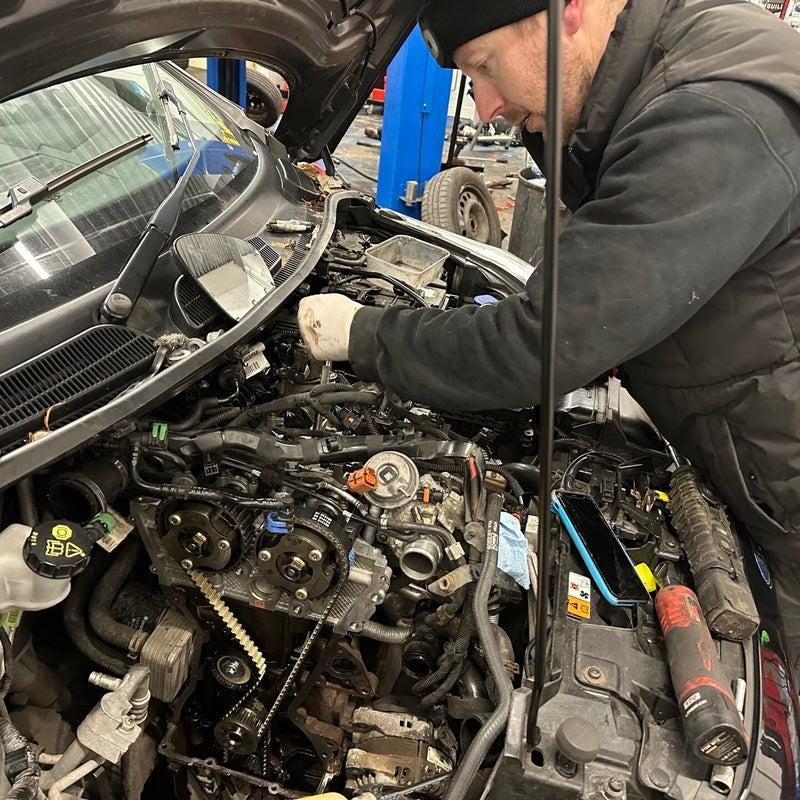
Another important consideration is the condition of associated components. A timing belt system can include tensioners, idler pulleys, guides, and, depending on the engine, a water pump. Replacing only the belt without assessing the rest of the system may not always be the most appropriate approach.
Understanding Timing Belt Replacement Costs
One of the most common questions motorists ask is about the wet timing belt replacement cost. However, there is no single figure that applies across all vehicles.
A wet timing belt, sometimes called a belt-in-oil system, operates inside the engine with exposure to engine oil. This design is used by certain modern engines and differs from a conventional dry timing belt.
The total cost of replacing a timing belt can depend on several variables:
- Vehicle and engine type — Different engines require different procedures, components, and labour times.
- Accessibility — Some timing systems are relatively accessible, while others require considerably more dismantling.
- Replacement parts — A complete timing system may involve a belt, tensioner, pulleys, seals, and potentially a water pump.
- Oil or coolant contamination — Contamination can affect the belt and may require investigation of the underlying cause.
- Additional maintenance — During the job, technicians may identify worn seals or related components that need attention.
- Manufacturer procedures — Some engines require specific tools, installation methods, or torque settings.
For this reason, a professional quotation should be based on the actual registration, engine specification, service history, and required parts rather than a generic online estimate.
Choosing Appropriate Timing Belt Replacement Services
Finding suitable Timing Belt Replacements Services involves more than comparing advertised prices. Timing system work is precision-based, and incorrect installation can create serious mechanical problems.
A responsible approach is to consider whether the workshop follows appropriate manufacturer procedures and uses suitable timing tools and replacement components.
Useful questions to ask a garage include:
- What replacement interval applies to my specific engine?
- Is the vehicle fitted with a conventional or wet timing belt?
- Which components are included in the replacement?
- Will the tensioner and related pulleys be inspected or replaced?
- Is the water pump part of the recommended maintenance procedure?
- Are manufacturer-recommended procedures being followed?
- Will the completed work be documented for future servicing?
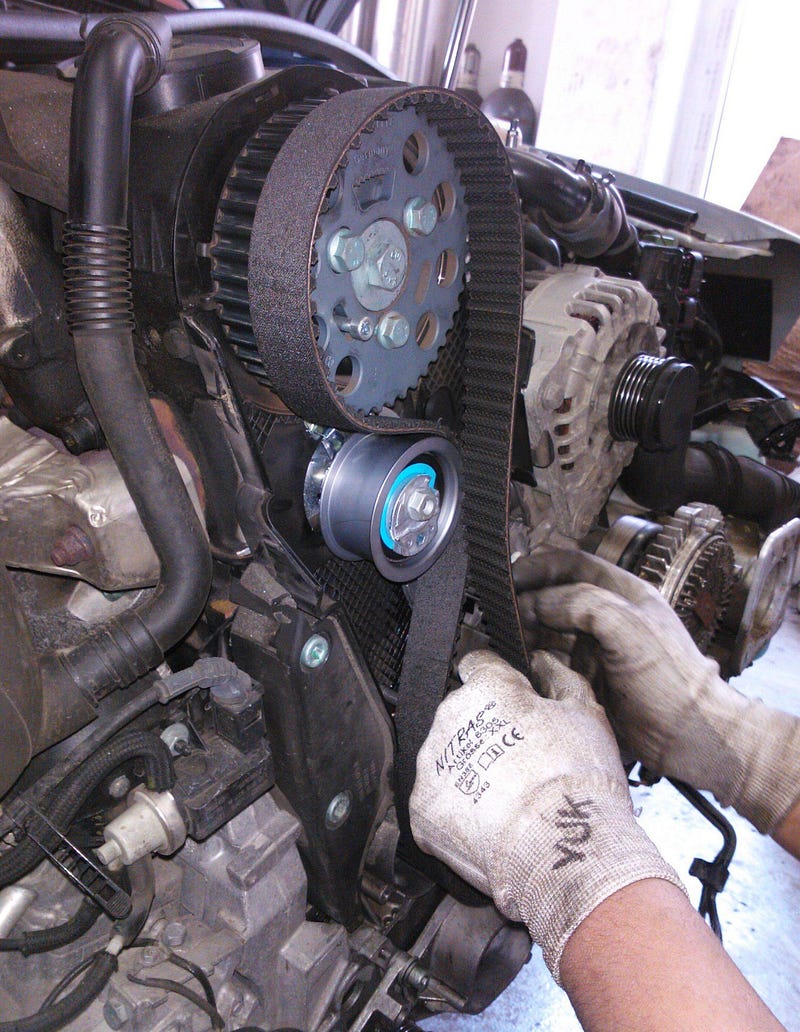
A documented replacement can also help protect the vehicle’s maintenance history. This may become useful when the vehicle is serviced again or eventually sold.
For motorists researching Timing Belt Replacements Trowbridge, S&M Auto Service is one example of a local automotive service provider offering timing belt replacement information and services. Its dedicated timing belt service page provides additional context for drivers considering scheduled timing-system maintenance.
Common Problems and How Drivers Can Reduce the Risk
Timing belt problems are not always caused simply by the belt reaching its scheduled replacement interval. External factors can contribute to premature deterioration.
Oil contamination is one example. If engine oil reaches a conventional belt because of a leaking seal, the belt material can deteriorate. Similarly, coolant contamination or problems with related components can affect the overall timing system.
Unusual noises, visible leakage, engine misfiring, starting difficulties, or other changes in vehicle behaviour should not automatically be attributed to the timing belt. These symptoms can have many possible causes, so proper diagnosis is important.
Drivers can reduce unnecessary risk by following several practical habits:
- Keep accurate records of timing belt replacement dates and mileage.
- Follow the vehicle manufacturer’s recommended maintenance schedule.
- Investigate oil and coolant leaks promptly.
- Avoid assuming a belt is healthy simply because there are no obvious symptoms.
- Ask about related timing-system components during replacement.
- Keep invoices and service documentation for future reference.
- Use the correct oil specification recommended for the engine, particularly where a wet belt system is fitted.
These practices are especially valuable for vehicles with uncertain histories. If a used vehicle has no reliable evidence that the timing belt has previously been replaced, it may be sensible to obtain professional advice rather than assuming the component is within its service life.
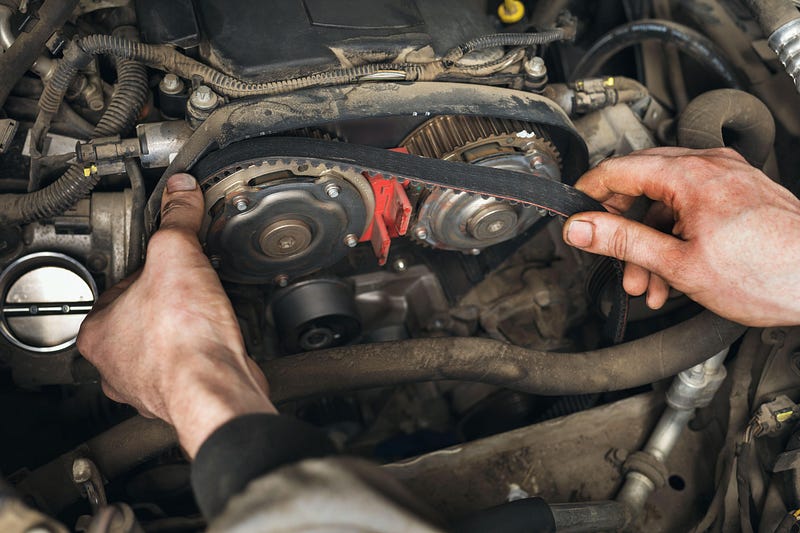
The Growing Importance of Preventive Engine Maintenance
Modern vehicles are designed to deliver improved efficiency, performance, and emissions control. At the same time, increasingly complex engine designs mean that preventive maintenance remains important.
The timing belt is a good example of a component where prevention can be significantly more practical than responding to a failure. Replacing a belt according to the correct schedule may involve planned expenditure, whereas a broken belt can potentially lead to extensive internal engine repairs.
This does not mean every vehicle requires immediate replacement. Instead, motorists should take a vehicle-specific approach based on manufacturer guidance, mileage, age, service history, and professional assessment.
The growing awareness of wet belt systems also highlights why motorists should identify the exact engine fitted to their vehicle before estimating maintenance requirements. Search terms such as wet timing belt replacement cost can provide a starting point for research, but they should not replace a vehicle-specific assessment.
Conclusion
Timing belts may be relatively simple components, but their role in engine operation makes their maintenance particularly important. Understanding the recommended replacement interval, recognising the importance of associated components, and keeping reliable service records can help motorists make informed maintenance decisions.
Whether researching Timing Belt Replacements Trowbridge or comparing Timing Belt Replacements UK, drivers should focus on vehicle-specific requirements rather than generic mileage figures or headline prices. For wet belt systems in particular, the exact engine design, replacement procedure, parts required, and condition of the surrounding system can all influence the overall maintenance requirement.
The key takeaway is straightforward: timing belt maintenance is best approached as planned preventative care. Following manufacturer guidance and obtaining professional advice when the service history is unclear can help protect engine reliability and reduce the risk of an unexpected and potentially costly failure.
Contact Us :
Read More : https://www.smautoservice.co.uk/timing-belt-replacement-services-trowbridge-uk/
Read More : https://writeupcafe.com/best-10-things-to-know-before-choosing-timing-belt-replacements-services
Read More : https://www.linkedin.com/pulse/best-10-complete-guide-bmw-mini-cooper-one-david-method-tiuqf


Comments
Post a Comment